Run your hand along a dock post or a submerged branch and you will feel it: a soft, slightly slick film. That film is periphyton, and it does more for the fish in your pond than almost anything else you can see.
What periphyton is
Periphyton is a living layer that grows on surfaces underwater. It is a mix of algae, bacteria, fungi and microscopic animals, along with the fine organic material they trap. It forms on rocks, plants, wood and man-made structure alike, anywhere there is a surface, water and enough light.
Why it matters: the bottom of the food chain
Periphyton is food. Snails, insect larvae, tiny crustaceans and newly hatched fish graze on it. Minnows, shad and fry feed on those grazers and on the film itself. Panfish and crappie follow the forage, and largemouth bass follow them. Every link in that chain starts with something growing on a surface.
- Periphyton grows on submerged surfaces.
- Grazers, insects and fry feed on it.
- Forage fish gather to eat the grazers and shelter in the cover.
- Predators such as crappie and bass set up where the forage is.
More surface, more food
Because periphyton only grows on surfaces, the amount of it a pond can carry depends on how much surface there is underwater. A pond with a bare, featureless bottom has little to grow on. Adding structure adds surface area, and with it more of the film that starts the food chain.
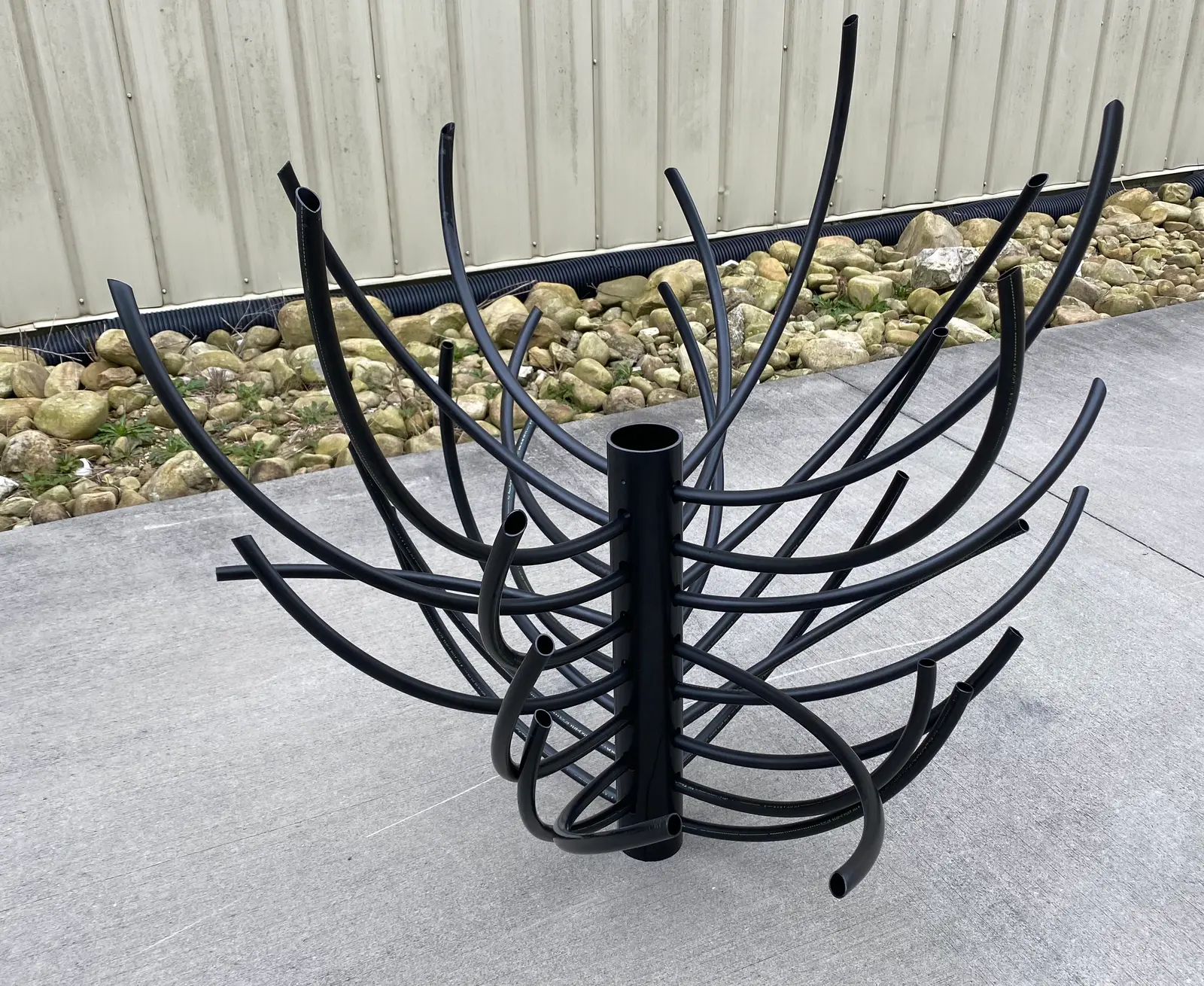
That is a big part of how a Suspending Fish Tree works. Each one carries dozens of polyethylene limbs, and every limb is surface for periphyton to colonize. Measured from the tubing each size takes, a single structure adds roughly:
- 3ft Habitat (16 limbs): about 25 sq ft of surface
- 5ft Habitat (28 limbs): about 45 sq ft
- 8ft Habitat (44 limbs): about 70 sq ft
- 10ft Habitat (56 limbs): about 90 sq ft
And because the limbs relax out flat in the water and stack in tiers, that surface is spread through the water column rather than lying on the bottom, so the film grows where fish at every depth can reach it.
How long it takes
Periphyton starts colonizing a new surface within days, and within a few weeks the limbs carry a visible film. Growth is fastest in warm, sunlit water near the surface and slower in deep or murky water, where less light reaches. Forage fish usually find a new structure soon after the film takes hold, and the predators are not far behind.
Safe for your pond
Our habitat structures are made from durable, BPA-free PVC and polyethylene piping. The materials are inert: they do not rot, rust or leach anything into your water, so the only thing growing on them is the periphyton you want. And since the structure does not break down, the surface it adds keeps feeding your pond year after year.
Want to put more food into your pond? Use the depth finder on our Fish Habitats page to pick the right height, or call us on 423-802-7111 and we will help you plan a layout.