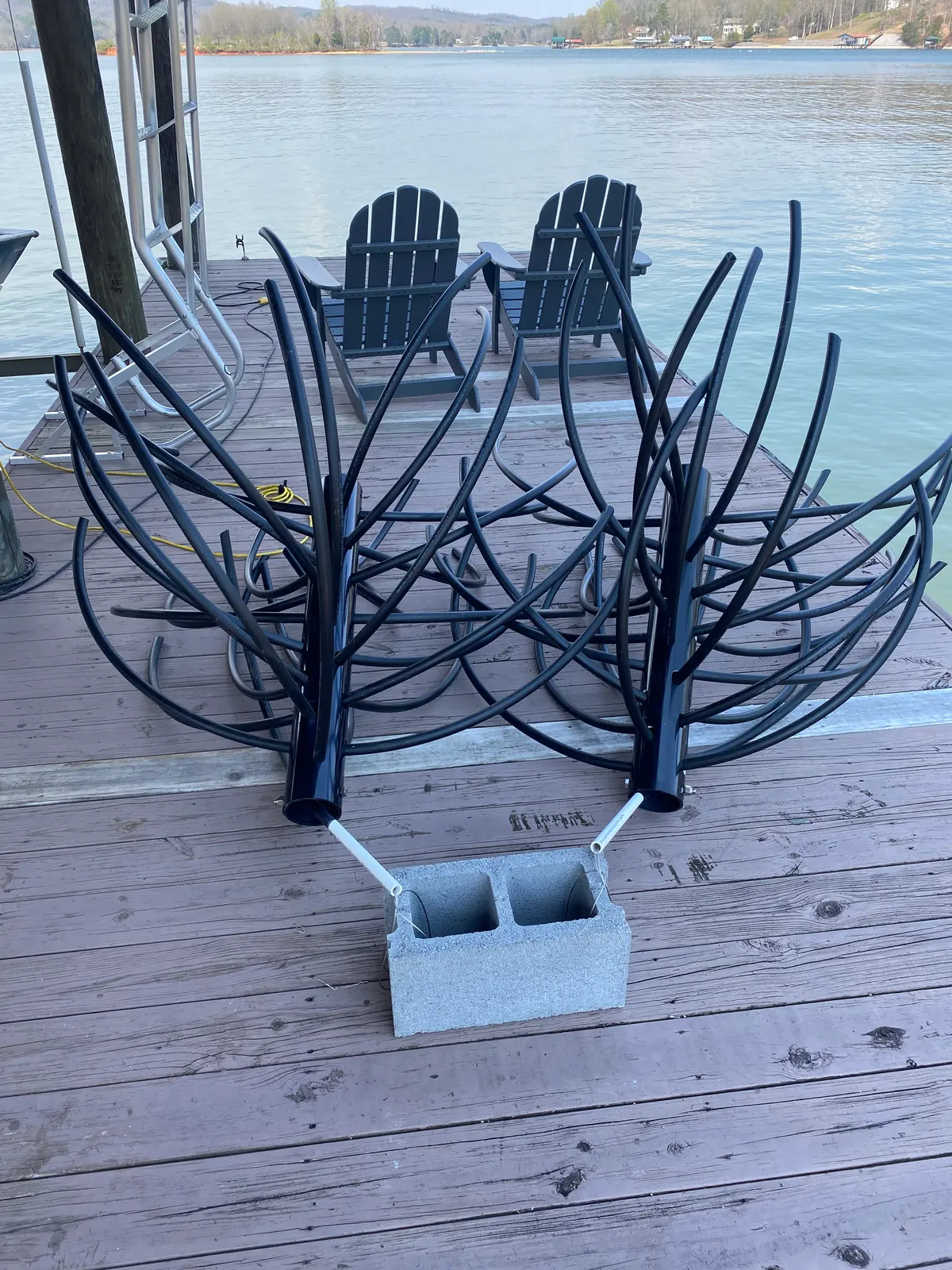
Every Suspending Fish Tree is the same structure: a black PVC trunk with tiers of polyethylene limbs. What changes from one pond to the next is how it is held in place. You can stand it on the bottom, tether it so it floats upright above an anchor, or hang it under a floating dock. Each one puts cover in a different part of the water column, so the right choice comes down to your depth, your bottom and what you want to fish.
Option 1: anchored on the bottom
The simplest setup. The trunk stands on the bottom and the limbs relax out flat around it once the water warms them, building layers of cover from the floor up. There are two ways to anchor it.
- On its base. Fit the trunk to its base and set it in place. Good on a firm, level bottom.
- On a cinder block. Wrap wire rope around the block twice, thread one end through the loop, and attach it to the trunk with the 1/2" bolt. The block is not included; any standard cinder block from a hardware store works.
Anchoring makes the most sense in shallower water, where you want the whole structure close to the bottom: coves, the shallow side of a dock, and nursery cover for fry and forage fish.
Option 2: suspended on a tether
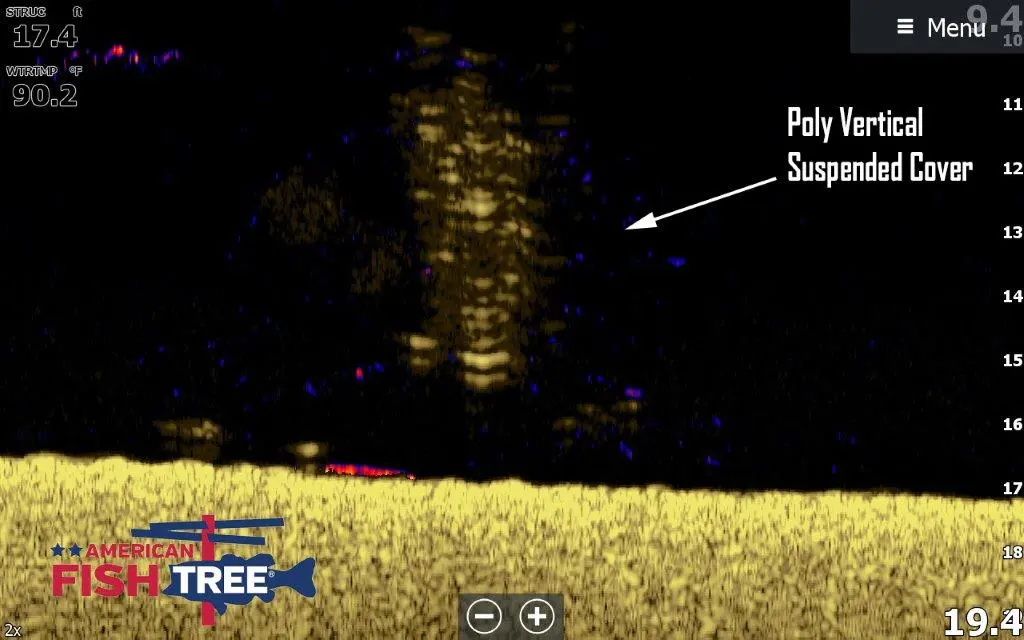
Here the trunk is tied to a weight on the bottom, a drilled concrete paver or a cinder block, by a marine-grade shock cord lanyard, and it rides upright above the anchor rather than sitting on it. A protective PVC sleeve covers the line where it meets the structure. The standard lanyard is 5 ft, and longer lines are available on request.
Suspending lifts the cover off the floor and into the water column, which is where crappie and other fish that hang at mid-depth spend their time. It also keeps the limbs clear of soft, silty bottoms that would bury a structure standing on them.
Option 3: hung under a floating dock
Floating docks shade the water underneath them, and fish already use that shade. Hanging a Fish Tree beneath one adds structure exactly where they gather, and you can fish it straight off the dock. Because the limbs are smooth polyethylene, they are snagless, so a lure worked through the cover comes back out.
How to choose
- Shallow water, firm bottom: anchor it on its base or a cinder block.
- Deeper water, or fish holding off the bottom: suspend it on a tether to lift the cover into the water column.
- Soft or silty bottom: suspend it, so the limbs stay clear of the muck.
- Floating dock: hang it underneath, where the shade already draws fish.
Whichever setup you choose, match the size to your depth so there are a few feet of water above the top of the structure. The depth finder on our Fish Habitats page does that for you, and the setup guide walks through assembly step by step.
Not sure which fits your water? Call us on 423-802-7111 or send the details through the contact page, and we will help you plan it.